
The RHTF: How Providers Can Prepare for State-Led Funding
The Centers for Medicare & Medicaid Services (CMS) has detailed a landmark funding opportunity through the Rural Health Transformation Fund (RHTF). This initiative is designed to fundamentally reshape healthcare in rural America. While states are the sole entities eligible to apply for these funds, the program's structure creates a critical downstream opportunity for providers.
For rural hospitals, Federally Qualified Health Centers (FQHCs), and other care organizations, the time to prepare is now. Understanding the priorities outlined by CMS is essential for positioning your organization to partner with the state and secure a portion of this transformative funding. This guide explains the state-led application process and outlines how providers can strategically prepare for what comes next.
State Applications, Provider Opportunities
The RHTF application process is explicitly directed at state-level agencies. Each Governor must designate one agency to submit a single, comprehensive application on behalf of the entire state by the November 2025 deadline. Providers cannot apply directly to CMS for this funding.
However, the states that receive awards will need strong implementation partners to execute their proposed projects. This is where the opportunity for rural hospitals, FQHCs, and technology partners emerges. By aligning your organization's capabilities with the goals of the Rural Health Transformation Fund, you can become an indispensable partner in your state’s plan, positioning yourself to receive sub-awards and contracts.
Decoding the CMS Vision for Rural Healthcare
The CMS FAQ document, available for download here, offers a clear roadmap of the agency's expectations. Providers should analyze this document to understand the types of initiatives that states will be incentivized to fund.
Key themes from the FAQ include:
- A Focus on Lasting Change: CMS will prioritize investments that create structural, sustainable improvements. The goal is to fund new care delivery models and infrastructure, not to provide temporary operating subsidies. Providers should be thinking about what long-term solutions they can offer.
- Innovative Workforce Solutions: The program encourages a modern approach to solving rural workforce shortages. The focus is less on physical recruitment and more on ensuring consistent service delivery. This opens the door for technology-enabled solutions that extend the reach of clinical staff.
- The Mandate for Data and Reporting: A core requirement of the RHTF is rigorous annual reporting on outcomes. States will seek partners who can deliver and demonstrate measurable improvements in access, quality, and cost-efficiency.
Preparing Your Organization for the Rural Health Transformation Fund
Proactive preparation is the key to securing a role in your state's RHTF initiatives. Providers, particularly rural hospitals and FQHCs, should begin developing strategies that demonstrate their value as execution partners.
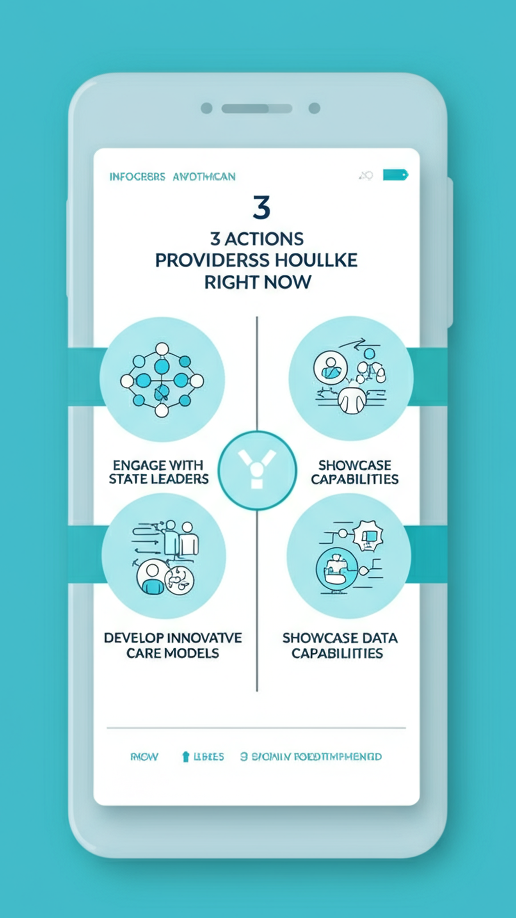
Engage With State Leaders
The first step is to ensure your organization is part of the conversation. States will build their applications based on perceived needs and known capabilities within their borders. Initiate contact with your state's Medicaid office, public health department, and relevant hospital or FQHC associations. Share your vision for rural healthcare transformation and learn about their priorities. Building these relationships now ensures you are a known and trusted entity when states begin selecting implementation partners.
Engage With State Leaders
The first step is to ensure your organization is part of the conversation. States will build their applications based on perceived needs and known capabilities within their borders. Initiate contact with your state's Medicaid office, public health department, and relevant hospital or FQHC associations. Share your vision for rural healthcare transformation and learn about their priorities. Building these relationships now ensures you are a known and trusted entity when states begin selecting implementation partners.
Build Your Case with Data
Given the strict reporting requirements of the Rural Health Transformation Fund, states will favor partners who can prove their effectiveness. Organizations with robust data analytics and reporting capabilities will have a significant competitive advantage.
Modernize Your Care Delivery Model
The RHTF's emphasis on innovative service delivery signals a clear opportunity for providers who embrace technology. Organizations should prepare to present models that move beyond traditional healthcare delivery.
Consider developing proposals centered around:
- Virtual Care and Telehealth: Implement centralized teams of clinicians who can provide virtual support across a broad rural geography, enhancing access to specialist and chronic care management.
- AI-Augmented Workflows: Utilize AI-powered platforms to streamline administrative tasks and clinical data analysis. This allows on-site staff to operate at the top of their license and manage larger patient populations more effectively.
- Hybrid Service Models: Create partnerships where local facilities like FQHCs or hospitals serve as the anchor for patient care, while specialized services and monitoring are delivered remotely.
Build Your Case with Data
Given the strict reporting requirements of the Rural Health Transformation Fund, states will favor partners who can prove their effectiveness. Organizations with robust data analytics and reporting capabilities will have a significant competitive advantage.
Start now to:
- Track Key Performance Indicators: Monitor and document your performance on metrics related to patient outcomes, hospital readmission rates, and cost of care.
- Demonstrate ROI: Build a clear business case that shows how your proposed model can deliver a strong return on investment for the state by improving health outcomes and reducing overall healthcare spending.
- Engage with State Leaders: Begin conversations with your state's Medicaid office, public health department, and hospital associations. Share your vision and data to establish your organization as a credible and capable partner.
By taking these steps, your organization can move from being a passive observer to an active participant, ready to capitalize on the opportunities presented by this historic investment in rural health.
Partner with HealthyConnect.AI to Build a Winning Proposal
Preparing a compelling, data-driven proposal for state consideration requires the right tools. HealthyConnect.AI provides the AI-powered patient engagement, remote monitoring, and telehealth infrastructure that aligns perfectly with the goals of the Rural Health Transformation Fund. Our platform helps providers demonstrate measurable improvements in patient outcomes and operational efficiency—key components of a successful state partnership.
Connect with our team today to learn how our technology can strengthen your position and help you become a vital partner in your state’s rural health transformation strategy.
Frequently Asked Questions (FAQ)
Who can apply for the Rural Health Transformation Fund?
Only designated state agencies can apply directly to CMS for the Rural Health Transformation Fund. Each state is limited to a single application. Healthcare providers, hospitals, and FQHCs cannot apply directly but can participate as partners or sub-recipients in their state's funded projects.
How can my FQHC or rural hospital benefit from the RHTF?
You can benefit by positioning your organization as an essential implementation partner for your state's application. By developing innovative, data-driven care models that align with CMS priorities, you become an attractive candidate for receiving a portion of the funds the state is awarded.
What types of projects is the Rural Health Transformation Fund looking to support?
The fund is designed to support projects that create lasting, structural change in rural healthcare. This includes investing in technology infrastructure, new care delivery models like telehealth and remote monitoring, and innovative rural healthcare workforce solutions that improve access and quality of care.
Why is data so important for this funding opportunity?
CMS requires states to report annually on project outcomes. Therefore, states will seek partners who can provide clear, measurable data demonstrating improvements in patient access, care quality, and cost savings. Strong data capabilities will be a key differentiator for providers seeking funding.
What should my organization do now to prepare?
Start by reviewing the CMS FAQ to understand the program's goals. Begin developing tech-enabled care models that align with those goals and start tracking data to prove their effectiveness. Finally, initiate conversations with state health leaders to position your organization as a ready and capable partner.