
Rural Health System Revitalization: A Closer Look at the $50 Billion Initiative
Every individual deserves access to quality healthcare, no matter where they live. However, challenges remain for people in remote areas because of distance and limited resources. Congress has recently taken a bold step with a $50 billion commitment aimed at strengthening and revitalizing rural health systems.
For a detailed original analysis, we recommend reading Healthcare Brew’s recent article: The rural health transformation program, explained. After reviewing their insights, we are encouraged by the hope this initiative brings to healthcare leaders and patients alike. Our commentary extends the conversation, highlighting how Rural Health System Revitalization can help organizations, policymakers, and providers deliver transformative results. With collaborative effort and innovative technologies, we turn opportunity into improved outcomes. For resources and support in implementing remote care, visit Remote Care Partners.
What is the Rural Health System Revitalization Program?
As reported by Healthcare Brew, the program was developed to overcome the unique challenges for providers serving rural communities. The Centers for Medicare and Medicaid Services (CMS) are directing $50 billion over five years (2026–2030) to help states strengthen their rural healthcare infrastructure and access.
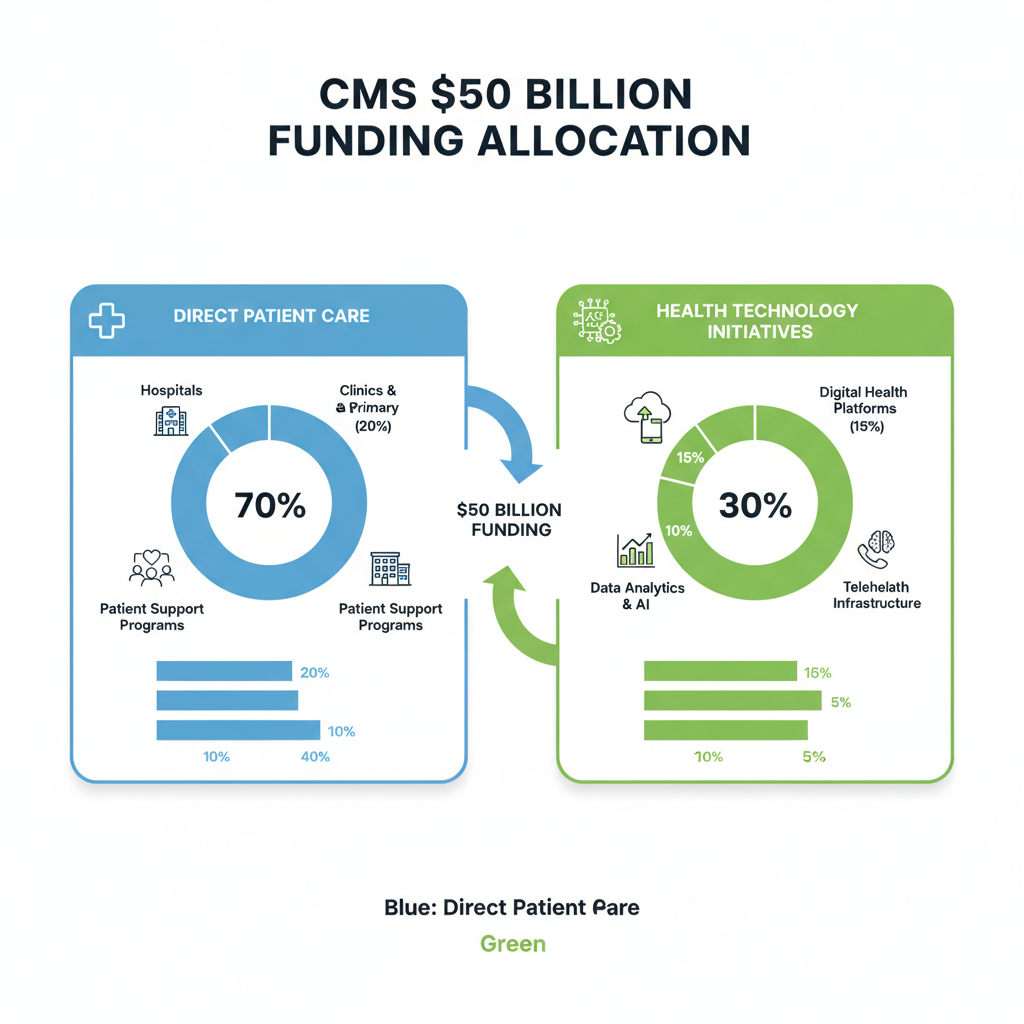
It’s a common misconception that most of the money will simply go to hospitals. In reality, only 15% is set aside for direct patient care at hospitals. Most of the funding is intended for broader improvements such as bringing modern technology to clinics and community health organizations, as well as supporting workforce initiatives. To learn more about integrating remote care in rural environments, see resources from Remote Care Partners.
Understanding the Funding Distribution
CMS designed the funding model to provide essential support to every state, with additional resources as an incentive for progress and creativity:
- Annual Distribution: $10 billion released each year.
- Base Allocation: $25 billion is split evenly, ensuring every state receives at least $100 million annually.
- Merit-Based Allocation: The remaining $25 billion is merit-based, rewarding states for effective programs and demonstrated progress.
This ensures stability for states embarking on new initiatives and encourages the implementation of evidence-based approaches—including remote patient monitoring solutions available from Remote Care Partners.
Collaboration for Greater Impact
Rather than limiting funding to hospitals, state governors’ offices select an agency to coordinate their programs. Funding is available to agencies, hospitals, clinics, technology providers, and academic institutions—enabling innovative partnerships that can reshape what’s possible for rural healthcare communities.
Building Stronger Communities Through System Revitalization
At Remote Care Partners, we believe better health happens when patients, their care providers, and technology work together. The prioritized use cases for this funding match our approach—offering guidance and clear pathways to empower both providers and patients.
Expanding Access with Modern Healthcare Technology
States are encouraged to use these resources for technology-forward solutions—supporting preventive and chronic care, telehealth, and connected health devices. Telehealth, powered by intuitive tools, can help close access gaps for those living far from hospitals or clinics. With remote monitoring and seamless communication, providers can deliver daily support and real-time feedback for patients—reducing unnecessary travel and empowering better health outcomes. Discover how you can integrate these solutions by connecting with Remote Care Partners.
Addressing Workforce and Specialist Gaps
Many rural communities struggle to attract and retain skilled professionals. Rural Health System Revitalization supports workforce development and training, leveraging partnerships with universities and local clinics. These funds give organizations the flexibility to develop robust staff training, use innovative technologies, and establish support systems that keep care close to home.
Addressing Concerns, Together
Transparency will be key as this ambitious program evolves. Since “rural” is not strictly defined in the funding law, some allocations may reach urban-based systems with rural outreach programs. To protect community needs, healthcare leaders must advocate for thoughtful, transparent program design and spending. For support in setting up measurable, tech-enabled initiatives, collaborate with Remote Care Partners for tailored solutions.
Leading the Way Toward Healthier Rural Communities
This revitalization program presents a historic chance to transform rural health. By investing in connected care technology, supporting staff development, and fostering collaborative partnerships, we empower every patient and every provider—no matter how remote.
Stay informed and get guidance on how your organization can participate in rural care innovation. With shared vision, reliable resources, and dedicated support, we will shape a sustainable, patient-centered healthcare system—together. Explore how to begin your journey with Remote Care Partners.
Frequently Asked Questions
Q: What is the Rural Health Transformation program?
A: The Rural Health Transformation program is a $50 billion initiative funded by CMS designed to improve rural healthcare systems over a five-year period. It focuses heavily on integrating health tech and stabilizing rural health workforces.
Q: How is the CMS funding distributed among the states?
A: CMS distributes $10 billion annually. Half is divided evenly among all 50 states, ensuring a baseline of $100 million per state. The other half is awarded based on the merit and progress of specific rural health initiatives.
Q: Can rural hospitals use the funds for direct patient care?
A: Yes, but only a portion. Approximately 15% of the fund is designated for direct patient care in hospitals, while the majority is intended for broader systemic improvements like telehealth implementation and staff training.
Q: How does health tech fit into the Rural Health Transformation initiative?
A: Health tech is a major focus of the program. Funds can be used to implement remote patient monitoring, expand telehealth services, and train staff on advanced medical technologies to overcome the geographic barriers of rural healthcare.
Q: Who is eligible to receive funding from this program?
A: Funds are awarded to state governments, which then allocate them to various entities. Eligible recipients can include rural hospitals, clinics, universities, and technology firms that partner to improve rural healthcare delivery.